How to Choose a Portable Jump Starter: Buyer’s Guide
Cranking amps start your engine, not the giant peak-amps number on the box. An independent, brand-neutral guide to choosing a portable jump starter.
Cranking amps start your engine, not the giant peak-amps number on the box. An independent, brand-neutral guide to choosing a portable jump starter.
A jump starter and jumper cables solve different problems. The honest answer to which one to carry, and the one scenario cables still win.
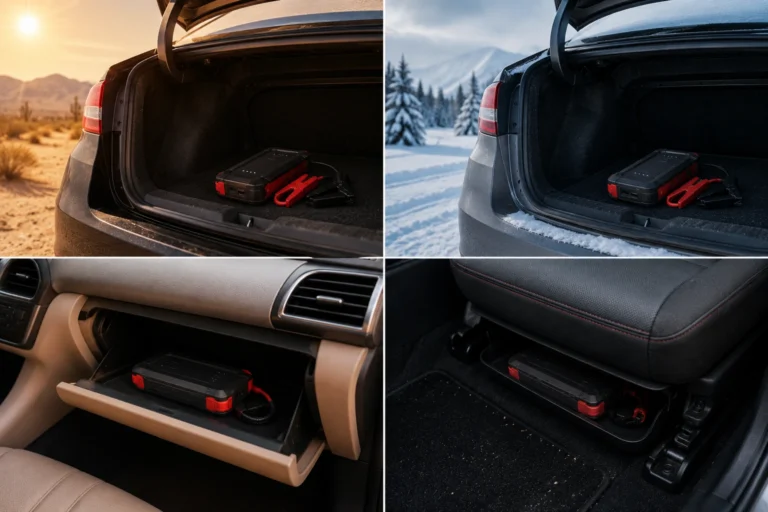
Trunk, glovebox, or under the seat? Where a jump starter should live depends on your climate, not a single rule. Hot-climate and cold-climate guidance.
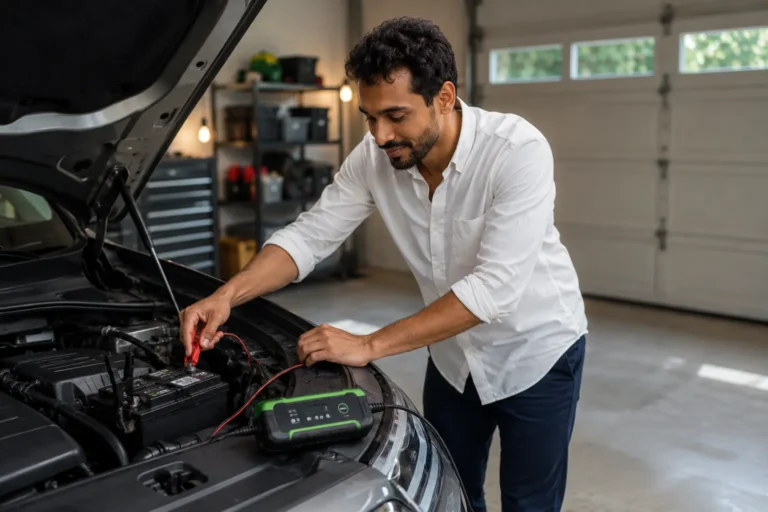
What a battery maintainer does, how it differs from a trickle charger, and when a solar option makes sense to keep a parked car ready to start.
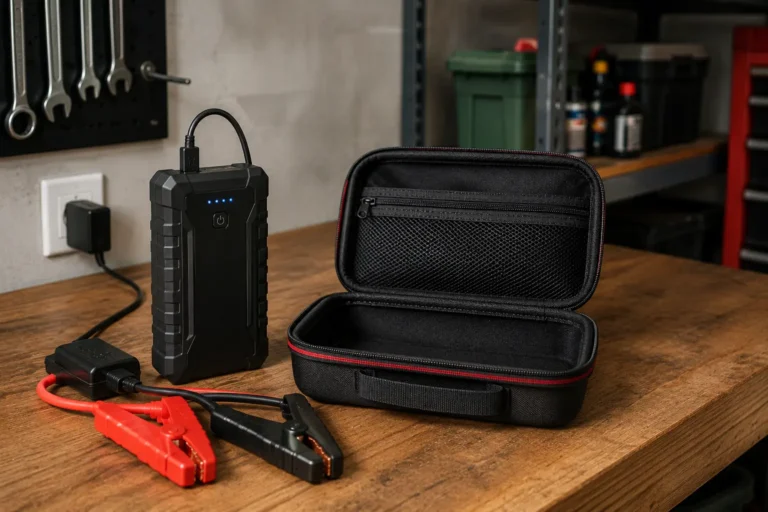
A jump starter that looks fine can still be too discharged to help. The storage routine that keeps yours ready: charge, location, and the check-in habit.
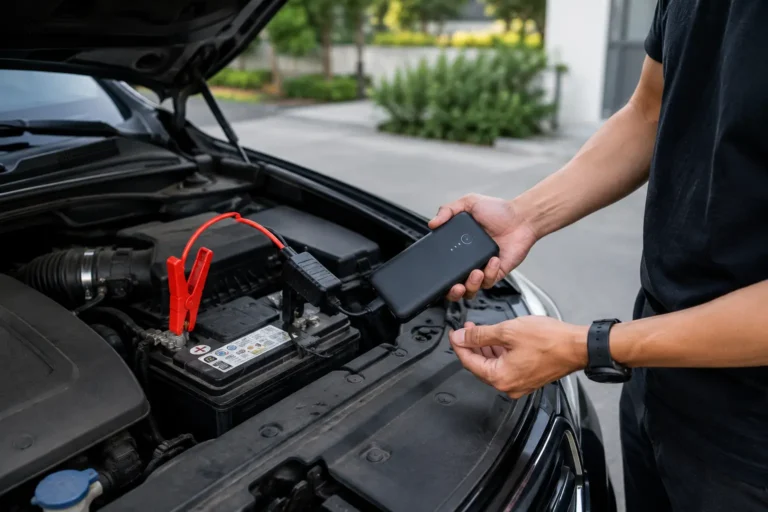
A phone power bank cannot jump start a car, and it is not about how much charge it holds. Why current delivery, not capacity, is what matters.
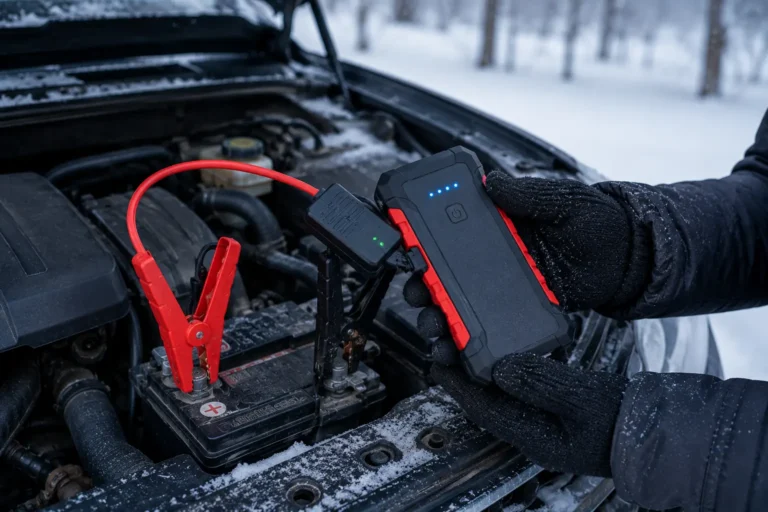
Yes, but cold hits your lithium jump pack and your car battery at once. Here is how to keep a portable jump starter ready and working all winter.
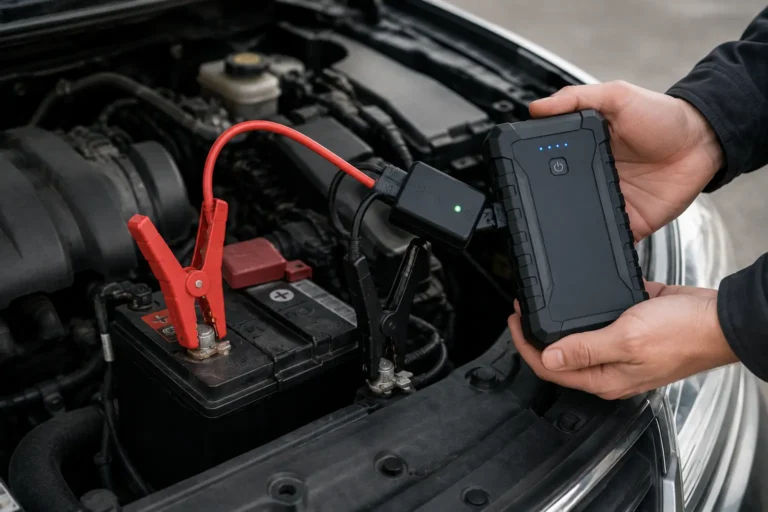
Match cranking amps to your engine, not the giant "peak amps" number. Real sizing by car, SUV, and diesel, plus the spec sellers hide.
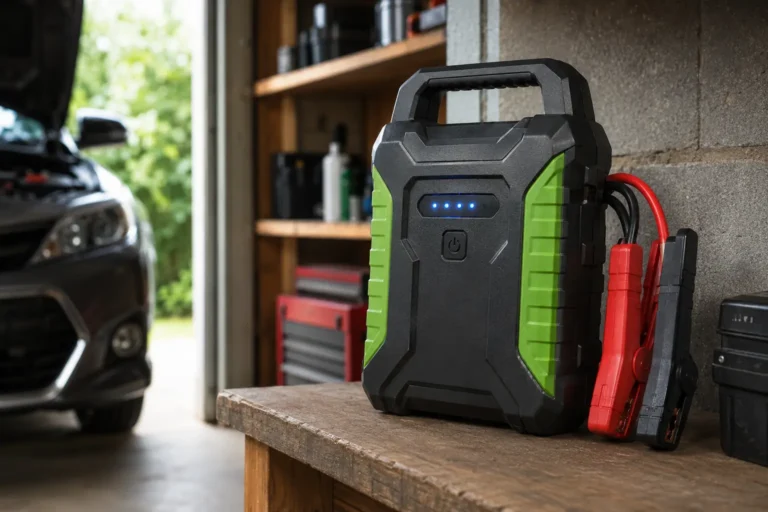
A jump starter that just sits there still needs a recharge schedule. The baseline interval, and the three things that shorten it.
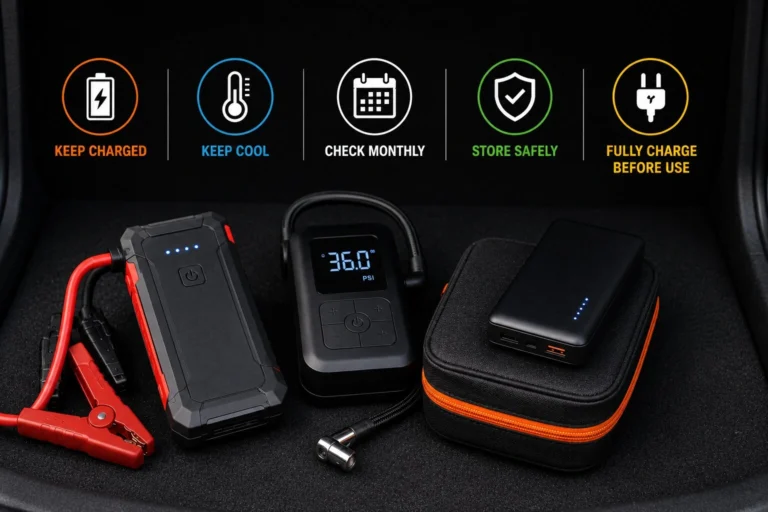
Every lithium gadget in your car self-discharges over time, and heat speeds it up. The one routine that keeps a jump starter, inflator or power bank ready.