12V Socket Only Works With Ignition On? Here’s Why
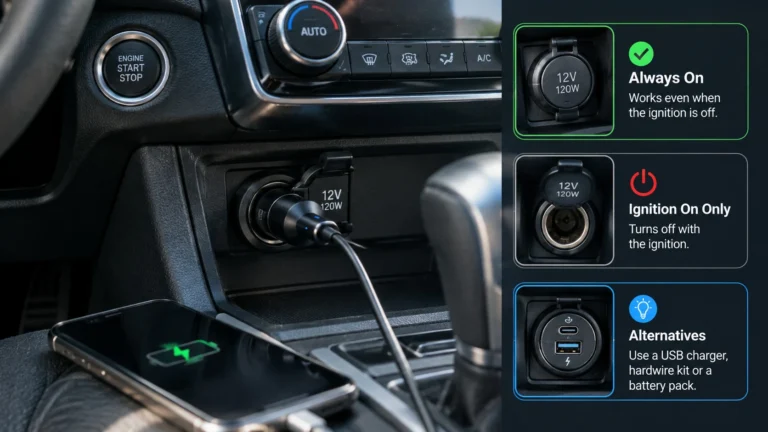
Many cars switch 12V sockets off with the ignition, to protect the battery. Learn how to tell your socket type in two minutes, and what your options are.
Many cars switch 12V sockets off with the ignition, to protect the battery. Learn how to tell your socket type in two minutes, and what your options are.
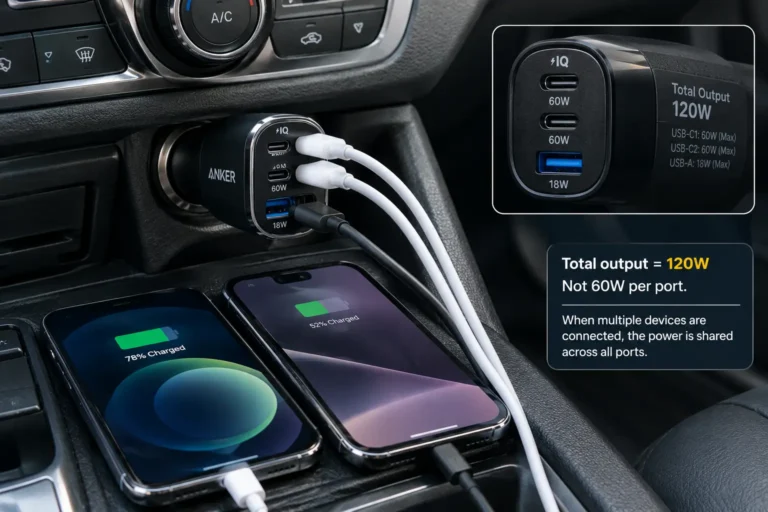
The headline wattage on a multi-port charger is a total across every port, not a per-port figure. Why your phone slows down when a second cable joins it.
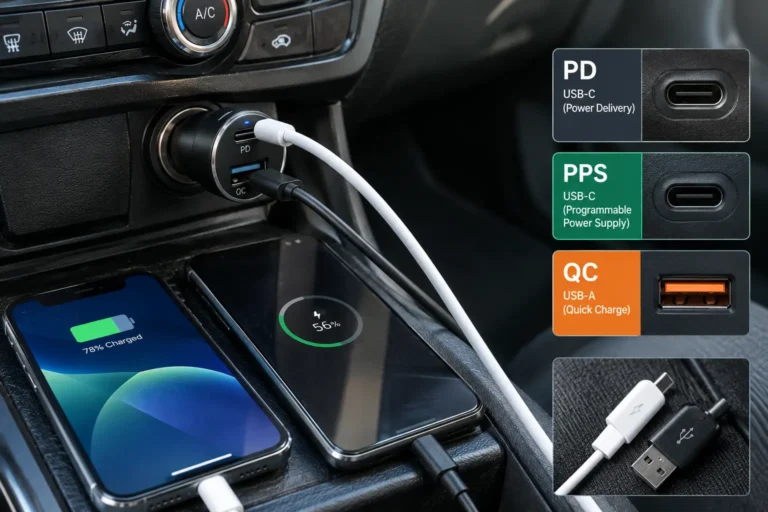
PD, PPS and QC are not the same thing, and your charger, cable and phone all have to match. What each standard does, in plain terms.
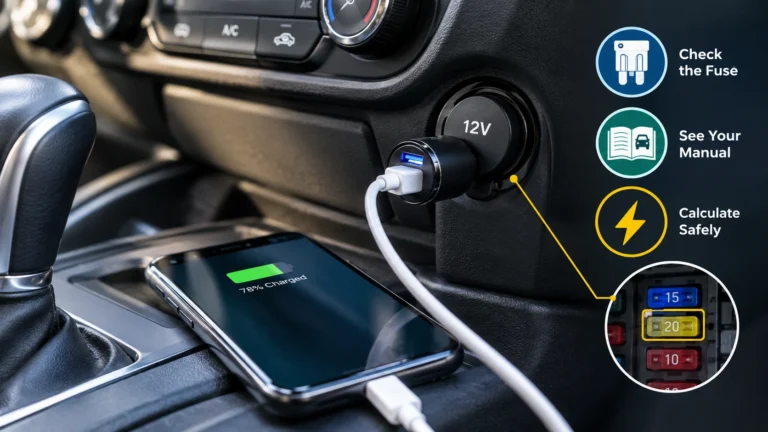
There is no single wattage limit for every car's 12V socket. The fuse decides. Here is how to find your vehicle's real number and use it safely.
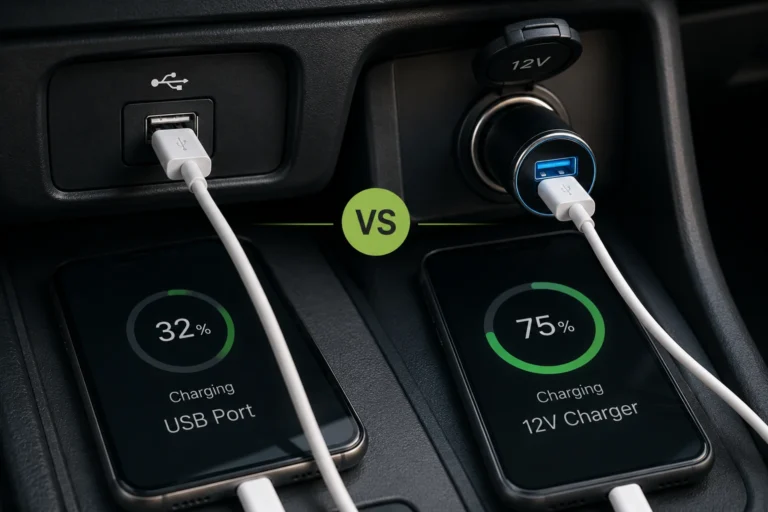
Your car's USB port was built for data, not power. Why the 12V socket usually charges faster, and why some newer USB-C ports break that rule.
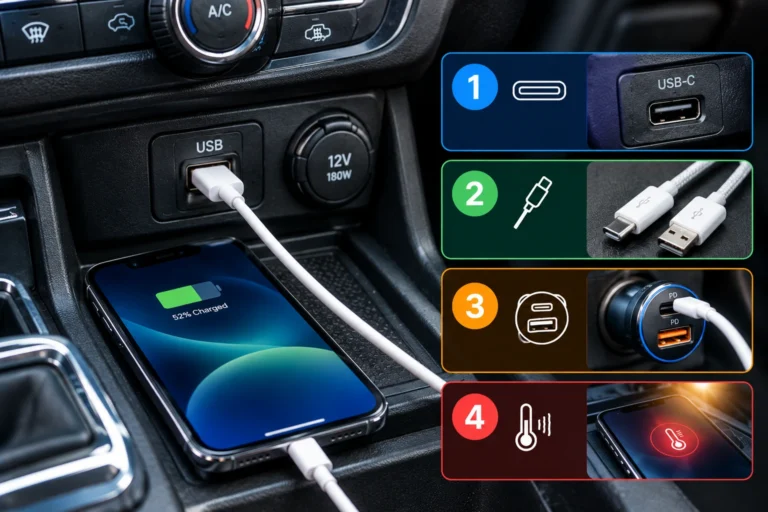
The car's built-in USB port is usually why. But if your battery is dropping while plugged in, it's the cable, a shared port, or heat. Check in this order.
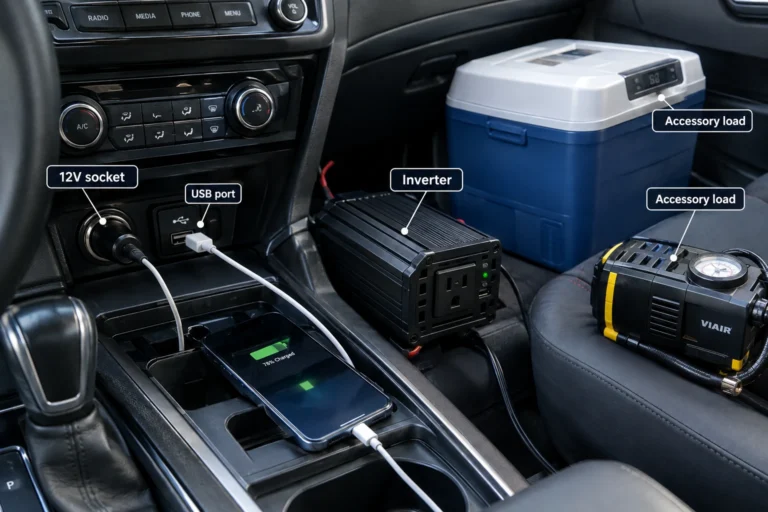
The 12V socket, USB port, inverter, and engine-off power follow one rule: the fuse sets the ceiling, not the gadget. The full picture, explained plainly.

Max PSI, CFM, duty cycle: what each tire inflator spec really tells you, what it hides, and what to do when a number is simply missing from the listing.
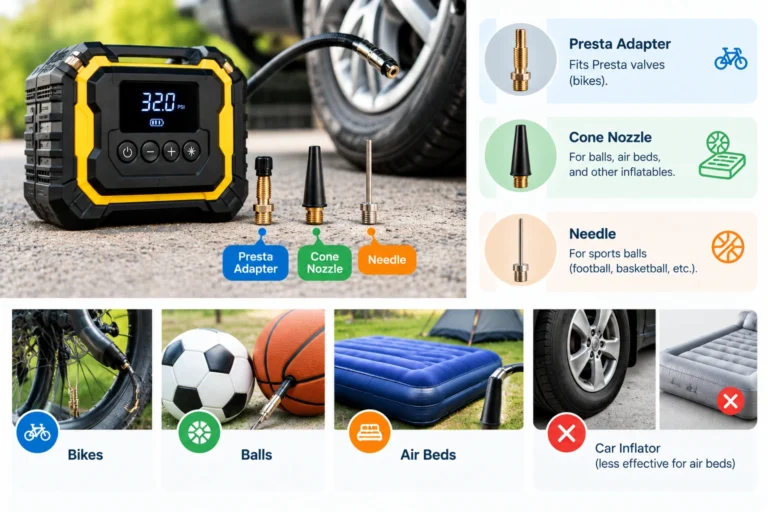
What the Presta adapter, cone nozzle and needle in your inflator's kit actually do, and why a car inflator struggles to fill an air bed.
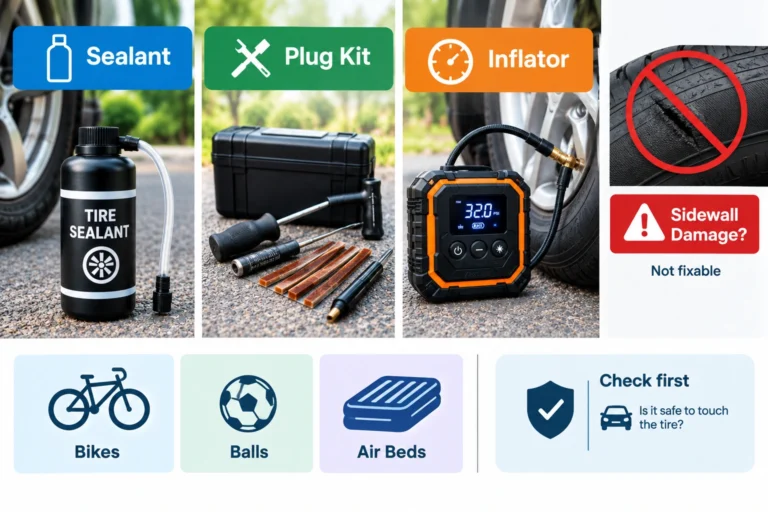
Sealant, plug kit or inflator? None of the three fixes a sidewall, and the first decision is whether it is safe to touch the tire at all.
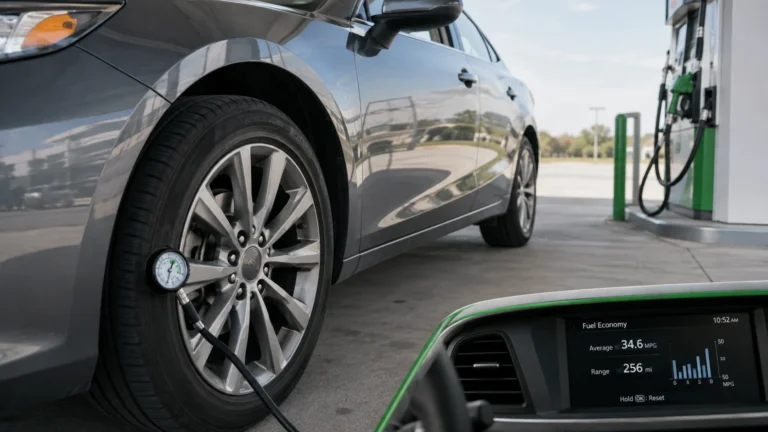
DOE and EPA data on how much tire pressure really affects mileage, why overinflating past the placard isn't a hack, and why EVs feel it more.
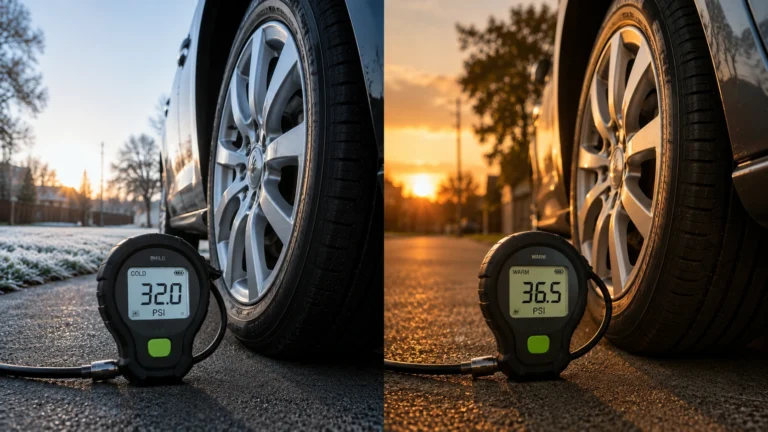
Morning and evening tire pressure readings can honestly disagree. Here is what cold really means and why you should not chase the warm number.