
The useful car interior gadgets are the ones that solve a problem you actually have repeatedly, without creating a second one: something new to store, charge, clean, or that rattles loose in the door pocket. Most cabin gadgets fail that second test even when they pass the first, which is exactly why glove compartments and trunks end up full of them. This guide applies that filter honestly across cleaning, cabin air, heat, cold, sun and storage.
The two tests a cabin gadget must pass
Cabin Comfort is the cluster with the lowest purchase urgency and the highest clutter risk on this site. Nobody needs a cabin gadget the way they need a jump starter for a dead battery or a tire inflator for a slow leak. That makes this the one category where the honest question isn’t “which one should I buy” but “should I buy anything at all.”
The filter is two tests, and a gadget has to clear both. Test one: does it solve a problem you actually have, more than once a month, not a problem you imagine having on a road trip you take twice a year. Test two: does it avoid creating a second problem? A second problem is anything that offsets the convenience: a battery to charge, a tank or reservoir to empty, a filter to replace, a cable to route, a housing that rattles against the console at highway speed. A gadget that clears test one but fails test two just relocates the hassle instead of removing it, and that is the honest reason so many well-reviewed cabin gadgets end up unused within a month.
Cleaning, and why suction numbers mislead
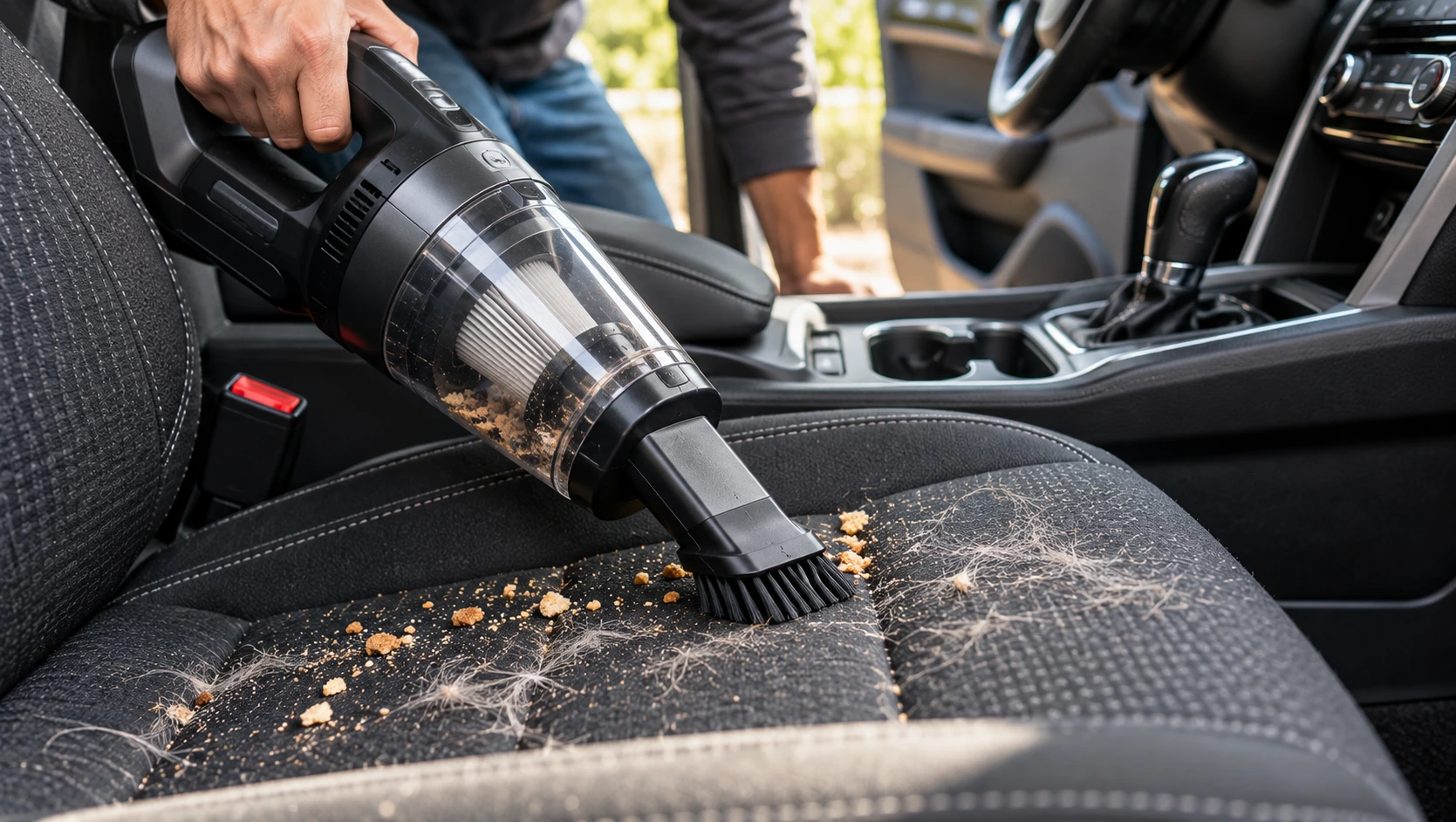
A portable car vacuum is one of the few gadgets in this cluster that clears both tests for most drivers: crumbs, dirt and pet hair are a repeat problem, and a small handheld unit stores easily in a trunk or under a seat. The catch is the spec sheet. Sellers lead with “peak suction” in watts, kilopascals or amps, a number measured at the motor under conditions that don’t reflect how the vacuum performs once it is pulling air through a hose, a brush head and a filter with debris already in it. What actually determines how much dirt comes up is sustained airflow working with a brush head matched to the surface, carpet, upholstery or hard trim, not the number printed largest on the box. This is the same pattern this site documents on jump starters, where a headline peak-amp figure describes a burst the battery cannot sustain rather than the number that starts an engine; the general version of that idea is covered at marketing numbers vs. working numbers. For the vacuum-specific version, including how to read kPa and airflow claims against each other, see what “peak suction” actually means, and for whether a handheld unit is worth owning at all against a shop-vac or a coin-op bay vacuum, see portable car vacuums: what to realistically expect. The corded, cordless and 12V tradeoffs (runtime, plug-in convenience, where you’ll actually use it) are sorted separately at corded vs. cordless vs. 12V car vacuums.
Cabin air, and why the ionizer question is a health question
Plug-in cabin air purifiers are the clearest example in this cluster of a gadget that needs a different kind of scrutiny, because the honest answer touches health, not just performance. Two different technologies get sold under the same “air purifier” label. Filtration-based units pull cabin air through a physical filter, mechanically capturing particles, and their performance is a function of filter quality and airflow, a checkable spec. Ionizer-type devices instead work by electrically charging particles so they stick to surfaces, and a number of that class of device generate ozone as a byproduct of how they work.
That distinction is not a performance footnote, it’s a safety one. Under California’s AB 2276, the California Air Resources Board limits indoor air cleaners sold in the state to no more than 0.05 parts per million of ozone emissions, specifically because ionizers, electrostatic precipitators and similar devices were found to exceed that limit. The US EPA’s own long-running assessment of ozone generators sold as air cleaners found them largely ineffective at concentrations that don’t already exceed public health standards, and states plainly that ozone can irritate the respiratory system, worsen asthma, and react with other cabin chemicals to form additional irritating byproducts. No federal agency has approved these devices for use in occupied spaces. None of that means every plug-in air device is a problem, filtration-only units don’t carry the same ozone question, but it does mean “air purifier” alone is not a spec you can trust on a listing page. If you have a respiratory condition, the right next step is a conversation with your own clinician, not a purchase based on marketing copy. The full filtration-vs-ionizer breakdown, including how to tell which type a specific product actually is, is at do car air purifiers work?, and the comparison against your car’s own cabin air filter, which many drivers overlook entirely, is at cabin air filter vs. a plug-in purifier.
Smell, and what a gadget can and cannot do
A bad cabin smell, mildew from a wet floor mat, spilled food, a pet, is a real recurring problem for a lot of drivers, and this is where a gadget’s honest limit matters most. Odor gadgets, vent clips, gel canisters, plug-in diffusers, mask a smell by adding a stronger one on top; they do not remove the source. If the smell is coming from mildew in the carpet padding or a spill that soaked into upholstery, no clip or diffuser fixes that, and running one for weeks on an unresolved source just means living with two smells layered together. The gadgets that genuinely help are the ones aimed at the actual mechanism: a small dehumidifier or moisture absorber that addresses damp air rather than covering the smell it produces. What each gadget category can and cannot do, and how to find the actual source before buying anything, is covered at getting a smell out of a car.
Heat and cold, and the honest limit of an accessory socket
12V heaters, defrosters and heated blankets plug into the same accessory socket every other 12V gadget in a car competes for, and that socket has a real, fused ceiling specific to the vehicle. This is where the second test, does it create a new problem, matters most, because the new problem here can be a tripped fuse or an overloaded circuit rather than just clutter. A 12V heater draws real current for the heat it produces, and that current has to come from somewhere; the accessory socket’s own wattage limit, which is vehicle-specific and belongs on your own fuse box and owner’s manual rather than a generic number here, is covered fully at the 12V socket wattage limit, explained. The honest performance ceiling of 12V heaters and defrosters themselves, what they can realistically do to cabin air on a cold start versus what marketing implies, is at do 12V car heaters actually work?, and the narrower, lower-draw case of a heated seat cushion or 12V blanket for one occupant is at heated seat cushions and 12V blankets: worth it?.
Keeping food and drink cold
A 12V or battery-powered car fridge is a genuine repeat-problem solver for anyone who regularly drives with groceries, medication that needs cold storage, or food for a job that keeps them away from a kitchen all day, and it clears the second test too as long as it’s sized to how it’s actually used. The choice that matters isn’t brand, it’s mechanism: compressor units cool actively and hold a set temperature regardless of ambient heat, thermoelectric units cool only relative to the surrounding air and struggle on hot days, a tradeoff covered fully at compressor vs. thermoelectric car fridges. The one question worth answering before buying, because it decides whether the fridge becomes its own second problem, is what it does to a parked car’s battery overnight; that depends on the fridge’s actual draw and the vehicle’s battery, and the honest answer, including when a fridge genuinely risks a dead battery, is at will a car fridge drain your battery overnight?.
Sun, glare and cabin temperature
A windshield sunshade is one of the cheapest, lowest-risk gadgets in this entire cluster: it stores flat, folds in seconds, and directly addresses two real repeat problems, a scorching dashboard and steering wheel, and UV damage to interior trim over years of parking outside. Window film and tint solve a related but different problem, ongoing glare and heat while driving rather than heat buildup while parked, and come with their own legal limits that vary by state and are worth checking before installing anything. Whether a sunshade actually measurably lowers cabin temperature, and how much of that claim is honest versus marketing, is covered at do car sun shades actually work?.
Organization, or the gadget that solves a problem you created
Trunk organizers, seat-back pockets and console trays are an unusual case in this cluster: the problem they solve is often one that other gadgets created in the first place. A jump starter, a tire inflator, a tow strap and a portable fridge all need somewhere to live that isn’t rolling around loose, and an organizer that keeps them contained and accessible genuinely earns its space. The failure mode is buying organization before you have anything that needs organizing, which just adds bulk to a trunk or console that was fine empty. What actually holds up under real use versus what looks good in a product photo is covered at trunk organizers and boot storage, worth it? and cup holders, trays and console gadgets.
A category-by-category verdict
| Category | Solves a real repeat problem? | Creates a second problem? | Honest verdict |
|---|---|---|---|
| Portable car vacuum | Yes, for most drivers | Minor: storage, occasional charging | Earns its space; judge by airflow and brush head, not peak suction |
| Filtration air purifier | Sometimes, for allergy-sensitive drivers | Minor: filter replacement | Fine if it’s genuinely filtration-based, not an ionizer |
| Ionizer-type “air purifier” | Marketing claim, not established | Yes: possible ozone exposure | Needs named evidence before buying; treat as a health question |
| Odor clips and diffusers | Masks a symptom, not the cause | Minimal | Fine short-term; doesn’t replace finding the source |
| 12V heater or heated blanket | Yes, in a cold climate | Yes: draws real current from a shared socket | Fine within the socket’s own rated limit |
| 12V car fridge | Yes, for regular use | Yes: battery drain if oversized or left running unattended | Earns its space if sized correctly to actual use |
| Windshield sunshade | Yes | Essentially none | Clears both tests easily; one of the safest buys in this cluster |
| Trunk or console organizer | Only if you already own gadgets that need it | Minimal if sized right | Buy after the gadgets, not before |
What to buy last, or not at all
A handful of cabin gadgets exist mainly because they photograph well, not because they solve a problem most drivers actually have on repeat: decorative dashboard accessories, novelty vent clips with no real function, gadgets that duplicate what the car’s own climate control already does adequately. None of these fail because they’re badly made; they fail the first test before construction quality ever matters. The honest advice for this entire cluster is to buy in the order a real problem shows up (mess first, then air or smell if either is genuinely bothering you, then temperature extremes if your climate demands it, then organization once you own enough gadgets to need it), rather than filling a cart with everything a listicle called “essential.” The general version of this ordering logic, for the whole site rather than just this cluster, is at how to choose car accessories.
Deep dives
This pillar is the entry point to Cluster 7. Each spoke below goes deeper into one part of the category than a pillar can:
- Portable car vacuums: what to realistically expect
- Corded, cordless or 12V: which car vacuum suits how you clean
- Why “peak suction” misleads, the vacuum version of peak amps
- Car air purifiers: filtration vs. ionizers, and the ozone problem
- Getting a smell out of a car, what gadgets can and can’t do
- Cabin air filter vs. a plug-in purifier
- 12V car heaters and defrosters: honest expectations
- Heated seat cushions and 12V blankets
- Portable car fridges: compressor vs. thermoelectric
- Will a 12V fridge drain your battery overnight?
- Sun shades, window film and cabin heat gadgets
- Seat organizers, trunk boxes and boot storage gadgets
- Cup holders, trays and console gadgets: use vs. clutter
For the general framework this whole site applies to every gadget category, see how to choose car accessories and marketing numbers vs. working numbers, the same “headline number vs. working number” idea behind the vacuum section above.
FAQ
What are the most useful car interior gadgets to actually buy?
A portable vacuum judged by airflow rather than peak suction, a windshield sunshade, and a properly sized 12V fridge if you regularly drive with items that need to stay cold cover most of the genuine repeat problems drivers have. Everything else depends on your specific climate and habits.
Are car air purifiers actually worth buying?
It depends entirely on the technology inside. Filtration-based units mechanically capture particles and are a checkable, real function. Ionizer-type devices can generate ozone as a byproduct, which the California Air Resources Board and the US EPA both treat as a health concern rather than a performance question, so that category needs a named source behind any air-quality claim before you buy.
Do car vacuums with high “peak suction” numbers clean better?
Not reliably. Peak suction is measured at the motor under conditions that don’t reflect real use. Sustained airflow, working with a brush head matched to the surface being cleaned, is what actually determines cleaning performance.
Will a 12V heater or fridge drain my car battery?
It can, depending on the device’s actual draw, how long it runs, and whether the engine is on. Both figures are vehicle- and device-specific; check your accessory socket’s rated limit and the device’s own power draw rather than assuming.
Do dashboard air fresheners or odor gadgets actually remove smells?
Most mask a smell rather than remove its source. If a smell persists, look for the actual cause, commonly moisture, mildew, or a spill in the carpet padding, rather than layering a stronger scent on top indefinitely.
Is a windshield sunshade worth buying?
Yes, for most drivers who park outside in sun. It’s inexpensive, stores flat, and directly addresses both a hot dashboard and long-term UV damage to interior trim, with essentially no downside or added maintenance.
How do I decide whether a cabin gadget is worth buying at all?
Ask two questions: does it solve a problem you have more than once a month, and does it avoid creating a new one, something to store, charge, clean, or that rattles loose. A gadget that fails either test tends to end up unused within a month regardless of its reviews.
Written from an independent, engineering-trained perspective (Diploma in Engineering in Power Technology, Feni Polytechnic Institute, plus diagnostic training and garage experience) by Emran Russell. This article is not a report of hands-on testing on any specific product; it describes how these gadget categories work and what named, published sources say about them. Your vehicle, climate and situation may differ from what is described here. For any question involving your accessory socket’s rated limit, your vehicle’s battery, or a respiratory condition potentially affected by cabin air, check your owner’s manual, the equipment’s own rating, or consult a qualified mechanic or clinician rather than relying on a product listing.